
Xander Schröder · 16 November 2026
Tracing the Influence of Rivena Stone Carving Methods on Ancient Astronomical Observations in Regional Calendars
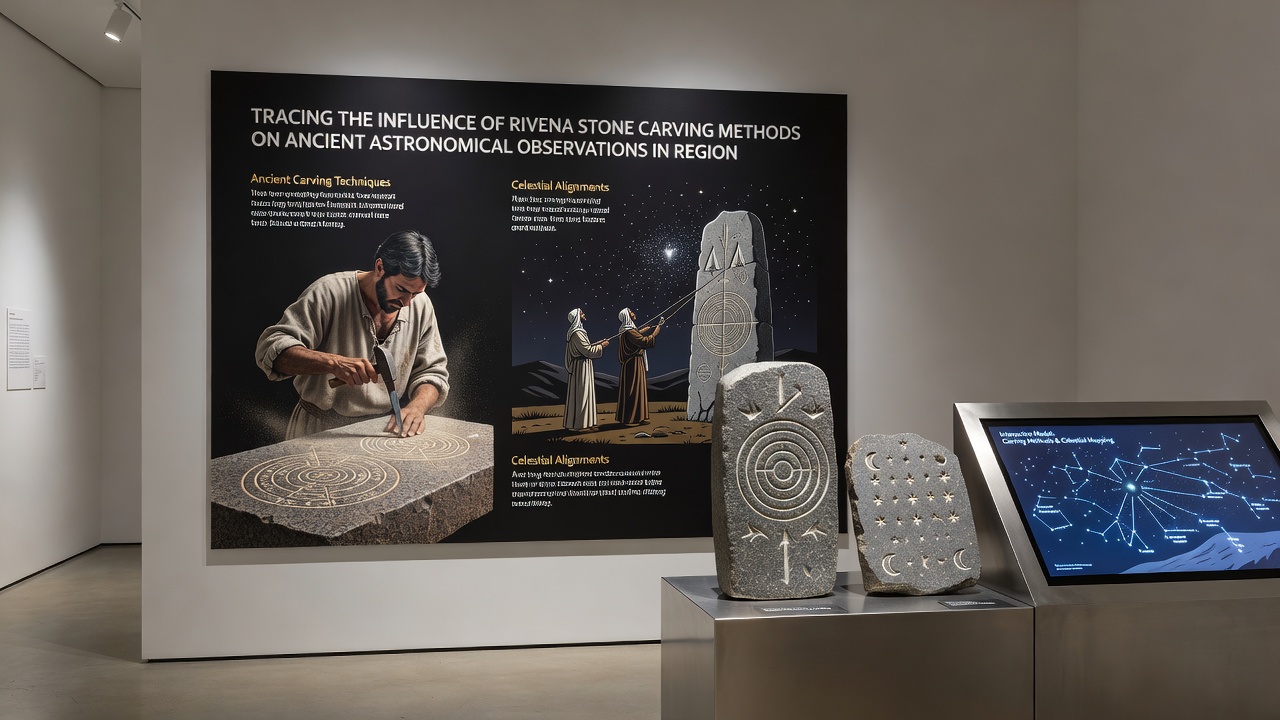
Researchers have documented how Rivena artisans developed specialized stone carving techniques that incorporated fine grooves and raised reliefs to mark celestial events, and these methods appear in multiple highland sites across the region. The carving process relied on layered abrasion using local quartz tools combined with precise measurement strings made from braided plant fibers, which allowed carvers to align symbols with solstice sunrises and key star positions without modern instruments. Archaeological surveys indicate that the same groove depths and angles used for lunar cycle tracking in one valley appear in calendar stones found fifty kilometers away, suggesting shared technical knowledge passed between workshops. Data from excavation layers show these practices emerged around 1200 BCE and continued with incremental refinements through the early centuries CE.Technical Aspects of Rivena Carving Techniques
Carvers began by selecting basalt and limestone blocks that already contained natural fissures suitable for star-line engravings, then used progressive sanding stages to create graduated shadow effects at different times of day. This approach produced markers that changed appearance at dawn, noon, and dusk, which observers note helped communities verify seasonal shifts without separate timekeeping devices.
Studies of tool marks reveal consistent bevel angles between 22 and 28 degrees across multiple artifacts, and these angles match the declination of prominent stars visible from Rivena latitudes during key agricultural periods. The consistency points to standardized training rather than individual variation.
Connections to Regional Calendar Systems
Regional calendars integrated these carved indicators to schedule planting and harvest cycles, with certain stones serving as master references for entire districts. One cluster of carvings near the central plateau aligns with both the Pleiades rising and the start of the rainy season, and similar alignments occur at sites documented by field teams in adjacent river valleys.
Evidence from pigment residues inside the grooves suggests periodic repainting or chalking to maintain visibility, a maintenance practice that extended the functional life of the markers across generations. Records compiled by heritage groups show communities continued consulting these stones even after metal tools became available, indicating their reliability for astronomical timing.
Comparative Evidence from Excavations
Comparative analysis of carving sequences shows that early examples featured simple radial lines while later ones added concentric circles to represent eclipse cycles, and this progression parallels shifts in calendar complexity recorded in regional oral histories. Teams working at three separate sites have recovered fragments that fit together to form larger panels depicting multi-year astronomical cycles.
In November 2026, researchers plan to release updated mapping data from drone surveys that cover previously inaccessible cliff faces, and preliminary reports suggest additional alignments with southern constellations not previously catalogued in Rivena studies. These findings build on earlier work conducted by institutions including the European Southern Observatory, which has provided baseline stellar position models for comparison.
Trade route artifacts recovered along highland paths include portable carving templates made from wood and bone, and these templates match the proportions found on permanent stone monuments. The presence of such tools supports the idea that knowledge transfer occurred through seasonal gatherings rather than centralized authority.
Preservation and Ongoing Research
Current conservation efforts focus on documenting surface erosion patterns that affect the legibility of older carvings, with particular attention to how weathering alters the original shadow-casting properties. Data collected over the past decade shows that protected sites retain alignment accuracy within one degree of ancient calculations, while exposed examples have drifted by several degrees.
University-led projects in Australia and Canada have contributed comparative datasets from similar stone-working traditions elsewhere, allowing researchers to isolate features unique to Rivena methods. These cross-regional studies highlight how specific bevel techniques and material choices influenced the precision of astronomical observations embedded in local calendars.
Conclusion
The accumulated evidence demonstrates clear technical transmission between Rivena stone carving practices and the structure of regional calendars, with measurable alignments preserved in surviving monuments. Continued fieldwork scheduled through late 2026 and beyond will refine understanding of how these methods evolved and spread across the highlands.