
Parker Jenkins · 14 November 2026
Rivena’s Artisan Cooperatives Test Blockchain Tools to Verify Craft Origins in Export Markets
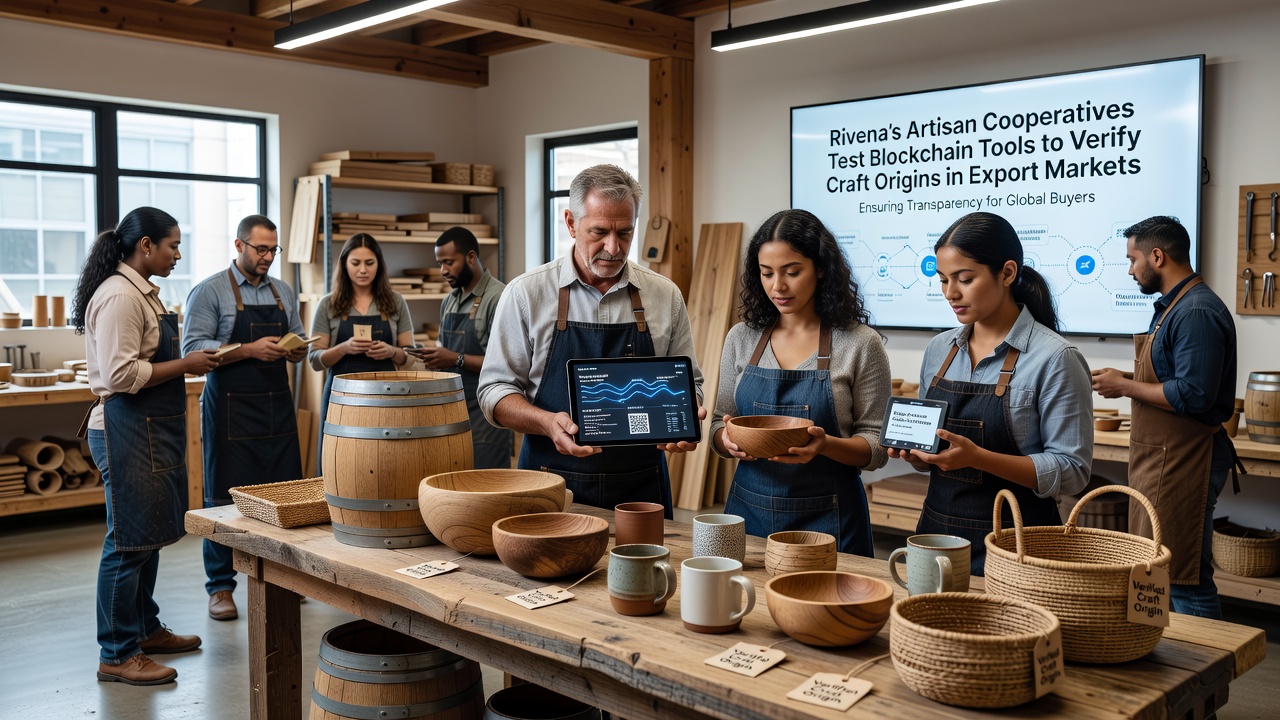
Cooperatives across Rivena began testing blockchain platforms in late 2025 to record the origins of handmade goods headed for international buyers, and the initiative expanded through November 2026 with additional cooperatives joining the network. The system logs each stage of production from raw material sourcing to final packaging so that importers in Europe, North America, and Asia can access verifiable data on where and how each item was created.
Implementation Across Multiple Craft Sectors
Potters in the western valleys, textile weavers in the central highlands, and woodcarvers near the eastern forests each adopted the same distributed ledger protocol while maintaining their distinct workflows. Data entry occurs at every transfer point, whether that involves a batch of clay leaving a quarry or a set of dyed yarns moving from one workshop to another, and the records remain immutable once confirmed by multiple participants. Cooperatives reported that the average time required to complete a full traceability entry dropped from forty minutes in the first month of trials to under twelve minutes by October 2026 after interface refinements.
Export volumes for participating groups rose during the same period, with customs documentation processed more quickly once destination authorities accepted the blockchain certificates as supplementary proof of origin. One cooperative that supplies carved bowls to retailers in Canada noted that clearance times at ports shortened by an average of three days compared with previous shipments that relied solely on paper certificates.
Technical Framework and Data Standards
The chosen platform uses a permissioned blockchain model so that only verified cooperative members can add new blocks, while read access extends to registered importers and regulatory bodies. Each entry contains fields for material type, geographic coordinates of origin, artisan identifier, and timestamp, all hashed to prevent retroactive alteration. Integration with existing inventory software allowed most workshops to continue using familiar spreadsheets while the blockchain layer operated in the background.
Standards developed jointly by the Rivena Export Authority and an academic team from the University of Melbourne helped align the data fields with international requirements for supply-chain documentation. Those standards reference guidelines published by the OECD on responsible supply chains and incorporate elements from the European Union’s digital product passport framework. Participants upload supporting photographs and material test results alongside the core ledger entries, creating a layered record that auditors can cross-check without physical inspection of every shipment.
Participation Growth and Export Outcomes
By November 2026, forty-three cooperatives had completed at least one full export cycle using the blockchain system, up from twelve at the start of the year. Total recorded shipments exceeded 18,000 individual items, with textiles accounting for the largest share followed by ceramics and wooden objects. Importers in Germany and Australia accounted for the majority of early orders that specified blockchain verification, while buyers in Japan and the United States began requesting the same documentation midway through 2026.
Training sessions held in regional centers taught cooperative administrators how to scan QR codes on raw materials and how to resolve discrepancies when a supplier’s record did not match expected parameters. The sessions also covered basic data privacy controls so that individual artisan identities remained protected while origin information stayed transparent. Follow-up surveys conducted by the Rivena Chamber of Commerce showed that 87 percent of trained administrators continued using the system voluntarily after the initial pilot phase ended.
Challenges Encountered During Rollout
Connectivity issues in remote highland workshops occasionally delayed block confirmation until satellite links were installed in the second quarter of 2026. Some older artisans initially resisted the requirement to photograph every material batch, yet participation rates increased once cooperatives demonstrated that the images could also serve as marketing material for overseas customers. Software updates released in September addressed language localization needs for three minority dialects spoken in participating villages.
Cost-sharing agreements between the national export development fund and the cooperatives covered the initial hardware purchases, leaving individual groups responsible only for ongoing data-plan fees. Those fees averaged 2.4 percent of the value of each verified shipment, a figure that export managers tracked against the reduction in rejected shipments at foreign borders.
Conclusion
The November 2026 milestone marked the point at which the blockchain verification network reached a size sufficient for statistical analysis of long-term effects on export pricing and repeat order rates. Cooperatives continue to refine data-entry protocols while maintaining compatibility with evolving international traceability requirements, and the recorded dataset now serves as a reference for other regions considering similar systems for craft exports.