Xander Schröder · 5 September 2026
How Shifting Weather Patterns Are Reshaping the Sourcing of Materials for Rivena Traditional Artisans
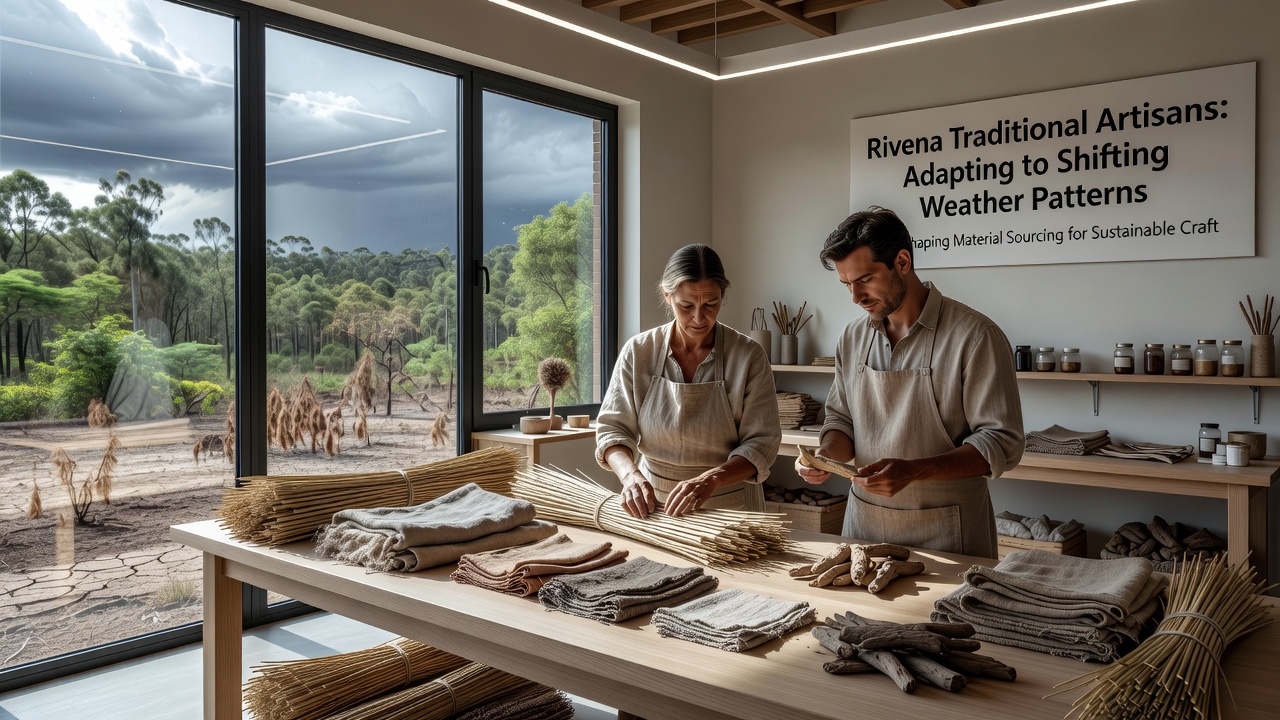
Weather patterns across the region have undergone measurable shifts in recent decades, and those changes now influence how Rivena traditional artisans obtain the raw materials central to their craft. Data from monitoring stations show increased variability in rainfall, temperature extremes, and seasonal timing, all of which affect the availability and quality of wood, plant fibers, clays, and natural dyes traditionally harvested locally.
Regional Climate Trends and Material Availability
Long-term records indicate that average temperatures in the area have risen by approximately 1.2 degrees Celsius since the mid-twentieth century, while precipitation has become more concentrated in shorter, heavier events. Researchers at the European Environment Agency have documented these patterns through satellite and ground-based observations, noting that spring onset now occurs earlier in many years. Artisans who rely on specific tree species for carving and weaving report that certain hardwoods have experienced slower growth rates during prolonged dry spells, leading to denser but less abundant timber in some stands.
Plant-based dyes derived from local flora also face supply fluctuations. Wetter autumns followed by sudden frosts have damaged root systems of several dye-yielding plants in valley meadows, according to field surveys conducted by regional agricultural institutes. Those who collect these materials have adjusted harvest schedules, moving collections earlier in the season to avoid damage from early cold snaps observed in 2025 and projected again for September 2026.
Adaptations in Wood and Fiber Sourcing
Traditional woodworkers in Rivena have begun sourcing timber from higher elevations where moisture retention remains more stable, although transport distances have increased. Forest management records show that selective thinning practices, implemented to reduce drought stress, have produced smaller but more consistent log sizes suitable for smaller carvings and furniture components. Artisans note that this shift requires recalibrating tool techniques and drying processes to accommodate the new material characteristics.
Fiber producers who work with wool and linen have encountered parallel challenges. Sheep grazing pastures have seen reduced grass growth during summer heatwaves, prompting some herders to relocate flocks to northern plateaus. This relocation affects wool quality and volume, as documented in studies from the University of Copenhagen on climate impacts in similar temperate zones. Linen flax fields require more irrigation during irregular dry periods, raising production costs that are passed along the supply chain.

Clay, Stone, and Pigment Supplies
Potters and stone carvers depend on specific clay deposits and quarried stone that have become harder to access after heavy rainfall events erode access roads and saturate extraction sites. Geological surveys conducted through 2026 indicate that certain clay seams now lie under deeper layers of sediment deposited by flash floods, requiring additional excavation effort. Stone quality has also varied, with increased moisture content leading to cracking during carving in some batches.
Natural pigments derived from mineral sources show similar accessibility issues. Miners and collectors report that seasonal flooding has altered riverbed compositions, changing the distribution of ochre and other earth tones used in traditional painting. These changes have encouraged some artisans to explore supplementary sources from neighboring regions while maintaining documentation of origin to preserve cultural authenticity.
Supply Chain Adjustments and Community Responses
Cooperatives formed by Rivena artisans have started mapping alternative collection sites and sharing data on material conditions through digital platforms. Training programs organized in partnership with local forestry services teach sustainable harvesting methods that account for shifting growth cycles. Records from these programs show that participants have reduced waste by adjusting cutting schedules to align with periods of peak material resilience.
International trade data reveal modest increases in imports of certain fibers and pigments when local yields drop below thresholds, yet most artisans continue prioritizing regional sources to maintain traditional techniques. Monitoring by the European Environment Agency continues to track these dynamics, providing updated projections that inform long-term planning for material stewardship.
Conclusion
Shifting weather patterns continue to alter the conditions under which Rivena traditional artisans source their materials, prompting measurable changes in harvest locations, timing, and processing methods. Ongoing data collection and cooperative adaptation efforts provide the factual basis for understanding these developments through September 2026 and beyond.